Support
to Independence
to Success
Craig High School is a complete, comprehensive high school experience with the academic support, strategies, and personal attention students need built directly into the school day.
A day at Craig High School feels like high school. Students move from class to class, work with different teachers, eat lunch together, and take part in electives, clubs, school traditions, and after-school activities.
The difference is what happens within our student daily high school experience. Craig High School is a college-preparatory program designed specifically for students with language-based learning disabilities. Structured literacy, academic strategies, executive functioning skills, assistive technology, self-advocacy, and individualized support are not added on as an afterthought or after a student struggles. They are embedded throughout the school day.
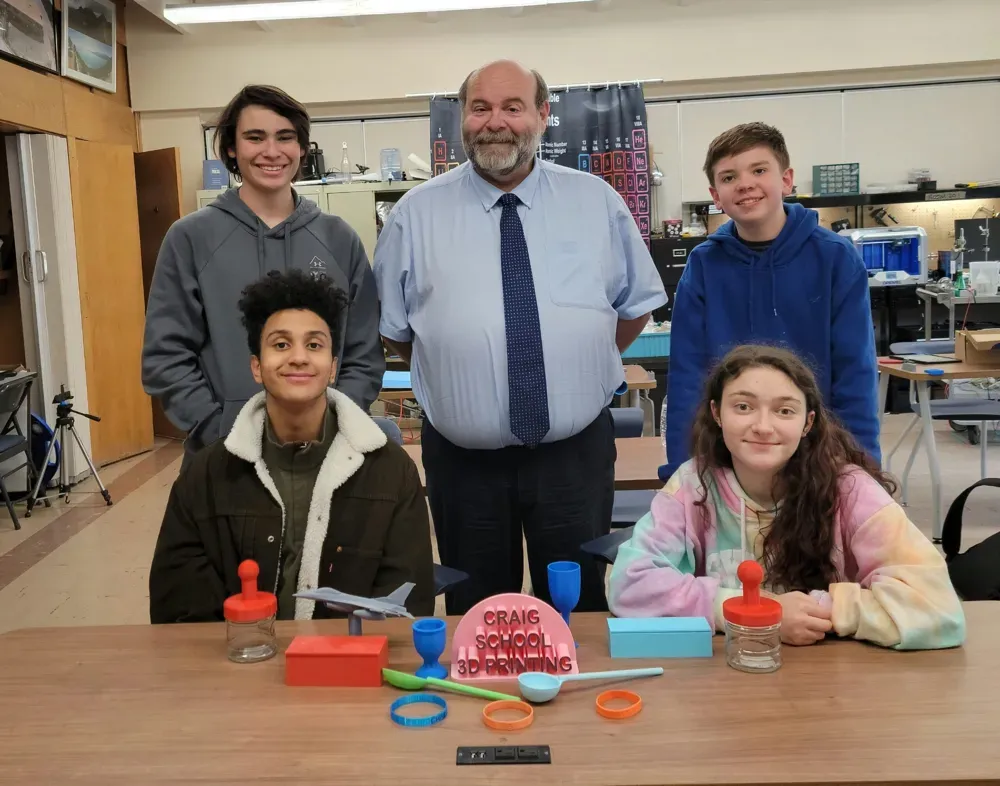
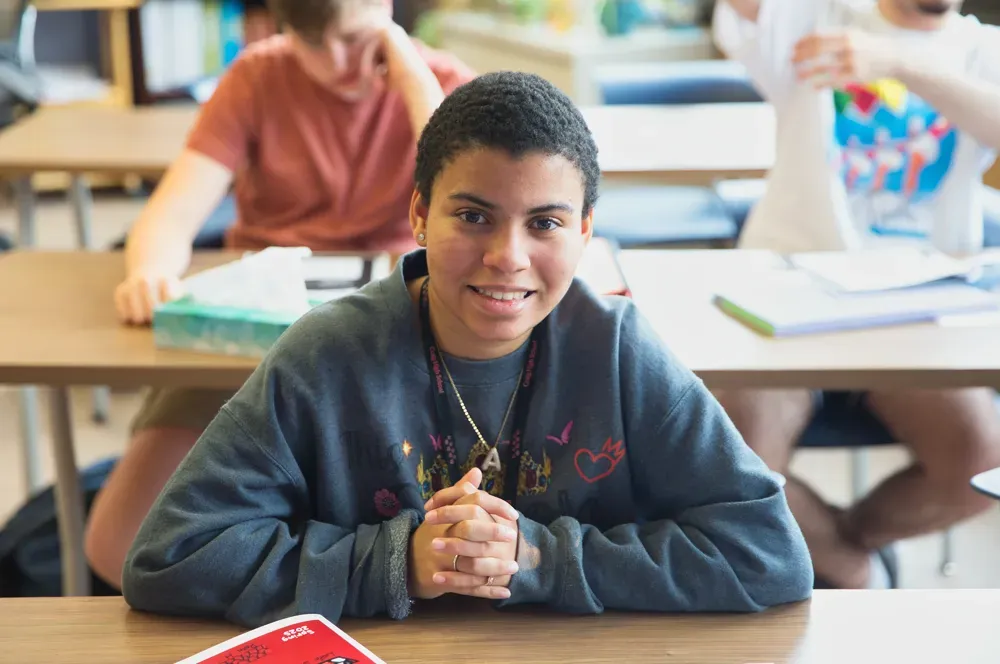
A Day in the Life of a Craig High School Student
A typical school day begins with Morning Support, a scheduled block when every CHS teacher is available to every student. Students can get personalized guidance, address individual goals, ask about a difficult assignment or upcoming assessment, finish something that they struggled with or need reassurance about from the night before, organize materials, or just make a plan for the day. They then move through seven academic periods. Because classes are intentionally small, teachers truly know their students as both learners and young adults and can provide clear multi-sensory instruction, modeling, guided practice, immediate and impactful feedback, and the right amount of support in our process for our students to become more self-aware and more independent.
On elective days, a dedicated Elective Block is built into their schedule, giving students opportunities to explore interests beyond their core academic classes and graduation requirements. Our day wraps with an end-of-day support that allows students a solid jump on any assignments for the evening, opportunities for clarity and feedback on what they are working on, and making sure they have everything they need for the trek home and get ready for the next day.
Students Learn How to Learn
Whether students are solving an algebra equation, analyzing a novel, conducting a science investigation, researching a historical issue, or preparing a presentation, Craig teachers deliberately teach students how to approach the task at hand.
- Organize materials and assignments.
- Break larger assignments into manageable steps.
- Identify important information.
- Note taking skills.
- Planning and managing time.
- Active Reading.
- Organize written ideas.
- Use assistive technology as a tool.
- Advocate for what they need to be successful.
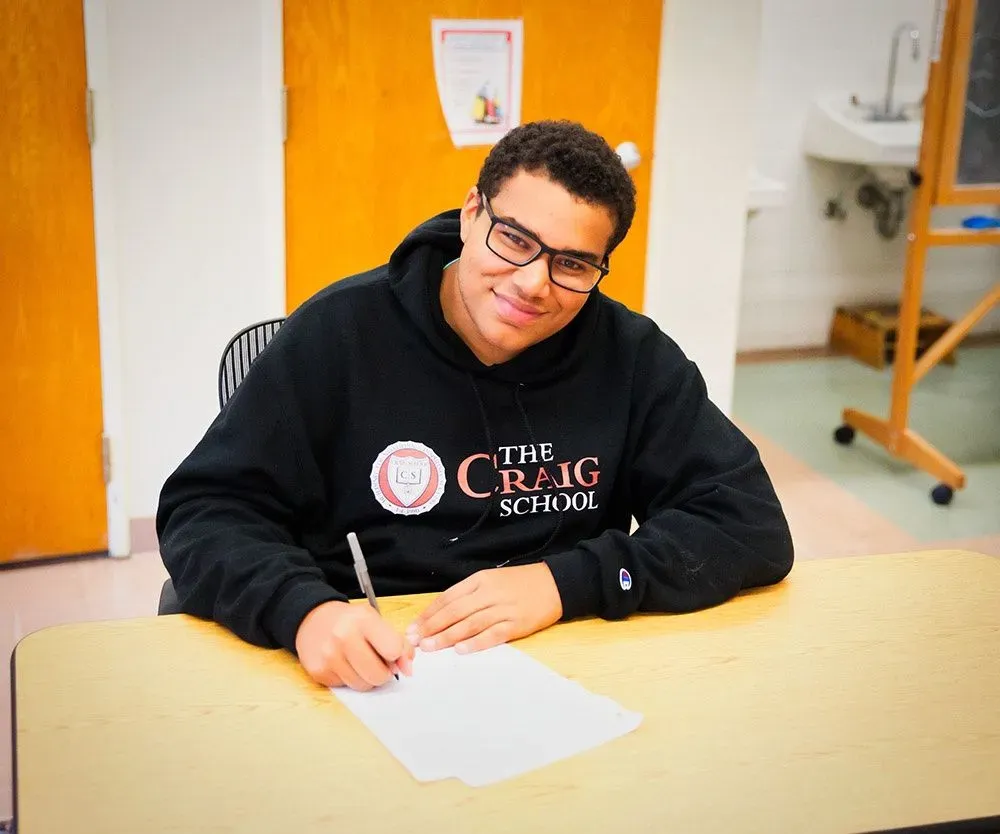
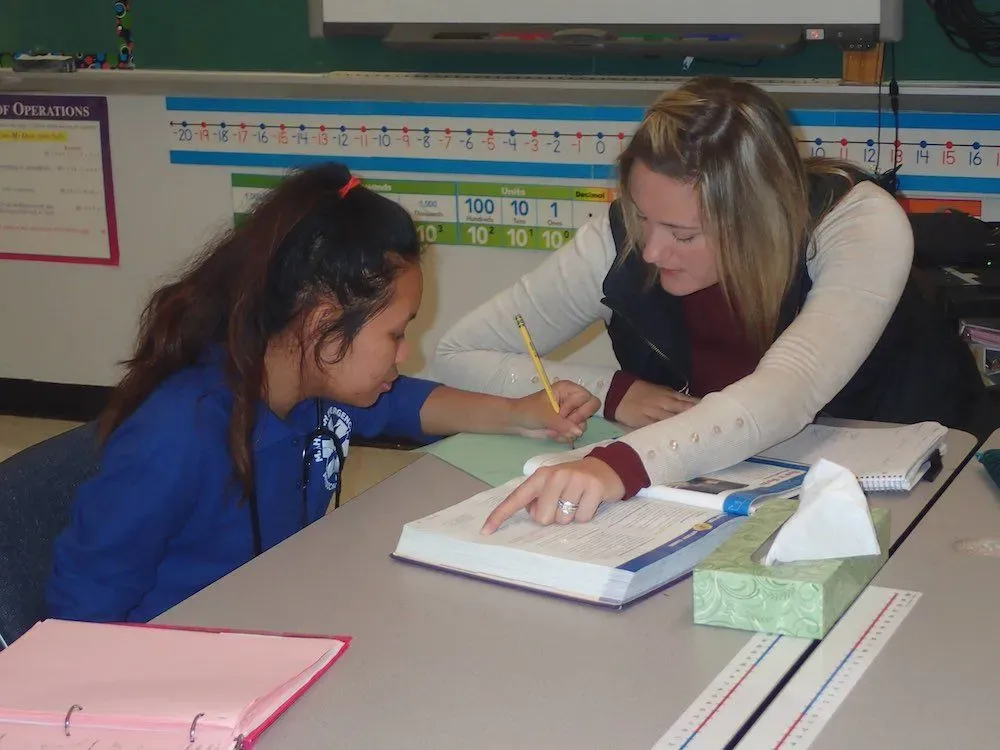
Support that builds independence, Independence that leads to success.
Craig High students receive a personal and specialized education without giving up the experiences that make high school more than just academics. Our academic courses are complemented by electives, college and career programming, school traditions, clubs, field trips, community experiences, school spirit events, and opportunities to participate in athletics both through Craig High and, when appropriate, through a student's home district.
College-Prep Academics, Taught Intentionally
Craig High School students work toward meeting all NJ HS Graduation requirements and earning a comprehensive college-preparatory diploma while receiving instruction specifically designed for students with learning disabilities.
A Craig classroom does not offer an easier curriculum. It offers a clearer, more intentional approach to teaching, learning, organizing, and managing progressively challenging content.
Our teachers use explicit instruction, modeling, guided practice, scaffolding, multisensory approaches, structured routines, executive functioning strategies, and frequent guidance and feedback to help our students access grade-level content and become more independent learners.
English Language Arts
More Time Where it Matters Most
Language-based learning disabilities can continue to affect reading, written expression, vocabulary, comprehension, and organization well into high school. At Craig High, we give these skills a very prominent place in our high school English Language Arts program.
For incoming high school students, Literature and Writing are taught as two distinct courses for the first two years of high school. This allows our students additional time to strengthen the reading and writing skills required across a college-preparatory curriculum. Current CHS English coursework is grounded in Structured Literacy principles and incorporates Keys to Comprehension and Keys to Content Writing.
Students receive explicit instruction, teacher modeling, guided practice, scaffolding, graphic organizers, writing templates, active-reading strategies, and a gradual release toward independence as they move through HS. Students learn not only what to read and write, but how successful readers and writers approach what they read and write.
Mathematics
Making Math Clear, Purposeful, and Practical
Our Math instruction emphasizes conceptual understanding, problem solving skills, and the ability to apply mathematics to real-world situations. Teachers break complex procedures into clear sequences, model thinking, provide guided practice, and use visual and multisensory supports in everything they do.
Students also learn strategies for organizing multi-step problems, identifying relevant information, checking their work, and articulating their mathematical thinking.
Science
Learning Science by Seeing, Doing, and Questioning
Science provides opportunities for students to learn through both direct instruction and experiences. Vocabulary and background knowledge are built upon so that language processing challenges do not become barriers to understanding more and more advanced scientific concepts.
Our students learn to observe, question, investigate, interpret data, apply the scientific method, and communicate conclusions through labs, projects, discussions, demonstrations, and their written work.
Social Studies
Connecting the Past, Present, and the Bigger Picture
Social Studies combines content knowledge with the reading, writing, research, discussion, and analytical skills students need beyond high school. Our students learn to identify relevant information, recognize cause and effect, compare perspectives, conduct research, support arguments with evidence, and connect past history to current events.
Students Get Help Without Giving Up High School
For many students who arrive at Craig High School, academic support has previously meant staying after school, missing another class, or receiving help only after a problem has reached a breaking point. Craig High approaches support a little differently.
Daily Structure
Morning & Afternoon Support
The school day begins with a dedicated Morning Support opportunity, and ends with a dedicated Afternoon Support. Small classes and close teacher-student relationships also allow our teachers to notice emerging challenges early, communicate and game plan with fellow teachers, and respond long before it becomes a greater issue or challenge.
Executive Functioning Every Day
Building the Habits That Make Independence Possible
Organization, time management, planning, task initiation, prioritization, self-monitoring, and goal setting are explicitly reinforced across our high school experience.
These skills become increasingly important as students move through high school. Teachers may initially provide significant guidance and structure, but students are progressively encouraged and expected to manage more of that structure themselves.
Individualized Structured Literacy Support
Foundational Reading Support Where Needed
For students who continue to need intensive reading and writing intervention, Craig High provides individualized Orton-Gillingham structured literacy instruction.
Based on student need, our students may work individually with our Orton-certified reading specialist one to three times each week. Instruction is diagnostic and prescriptive and may address decoding, spelling, vocabulary, morphology, comprehension, syllabication, fluency, and active-reading strategies.
Assistive Technology
Using Technology as a Tool for Independence
Technology is used as a learning tool rather than as a substitute for instruction. Students learn when and how to use assistive tech that can improve access, productivity, organization, reading, writing, and communication.
The goal is portability. Students should leave Craig High knowing which tech tools help, why they help, and how to use them independently in college, technical training, or in the workplace.
More Than an Academic Day
Craig High School is intentionally small, which gives students something that can be difficult to find in a larger high school: the opportunity to be known, to participate, to have a voice. Students are encouraged to explore interests, try something new, contribute to the school community, and develop relationships across the grades and outside of their academic classes.
Electives allow students to explore areas of interest without the same pressure associated with required academic coursework. Offerings can vary by trimester and provide opportunities across areas such as the arts, technology, computer science, business and entrepreneurship, culinary experiences, health and wellness, media, and practical life skills. Our school schedule includes a dedicated Elective Block on designated days that is built into a student's academic day and our trimester model gives students the opportunity to try several different experiences during the school year rather than having to commit to only one yearlong elective.
At a small high school, lunch is more than simply a break between classes. Students eat together, interact across grade levels, connect with teachers, participate in school activities, and build the social relationships that create a strong and genuine high school community. College admissions representatives also visit Craig High during lunch throughout the school year so students at all grade levels can learn about different college, technical, and postsecondary opportunities.
High school life includes shared experiences that students anticipate from year to year. Craig High School traditions and community experiences include Welcome Back activities, seasonal Spirit Days, school wide students and teacher celebrations, student-led clubs, college and career events, and senior traditions.
Beginning With the End in Mind
Preparing for life after high school does not begin in senior year at Craig High. It begins when students first walk through our door. Craig High's college and career program provides a four-year progression of self-awareness, career exploration, postsecondary planning, and transition preparation. Our students receive individualized guidance starting freshman year while developing the practical skills they will need to be an active participant and make informed decisions about college, technical training, vocational pathways, employment, and independent young adulthood.
Freshman-year programming focuses on self-awareness, learning styles, strengths, aptitudes, challenges, self-advocacy, and group dynamics.
Sophomore-year programming introduces career awareness and workplace preparation. Students explore career interests, make connections between their strengths and possible occupations, and begin building professional skills, and learn more about the world of work.
Junior-year programming moves students directly into postsecondary planning. Students explore colleges, community colleges, technical and trade programs, gap-year options, and other pathways while beginning application-related work and individualized transition planning.
Senior-year programming shifts the focus from getting accepted to being prepared to succeed after acceptance. Students learn about the differences between high school and postsecondary settings, accessing accommodations, navigating campus or workplace systems, managing deadlines, self-advocacy, resources at their disposal, and assuming greater responsibility for themselves.
From Morning Support to Heading Home
Every part of the Craig High School day is purposefully designed. Here is how a typical day unfolds.
8:00 AM