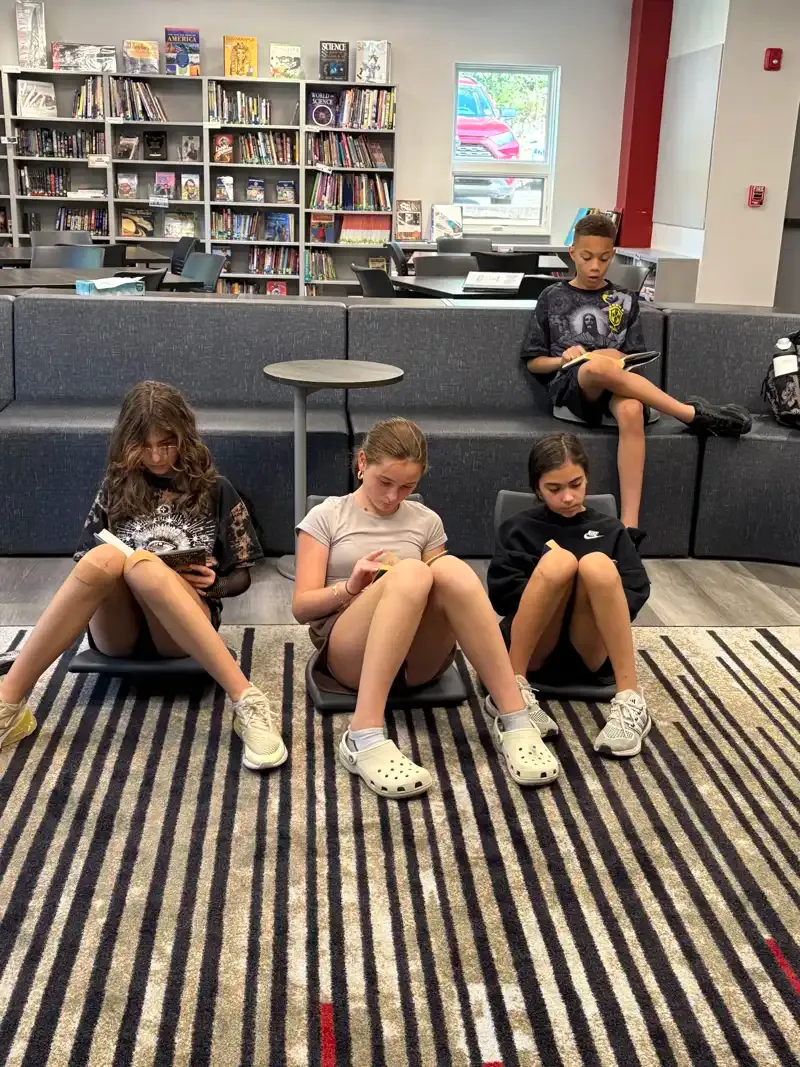
Structured Literacy
Structured Literacy continues through Middle School as students strengthen foundational reading skills while developing increasingly sophisticated comprehension, vocabulary, written language, and critical-thinking skills.
Learn MoreIndividualized Literacy Pathways
A key feature of Craig's Middle School program is the ability to adjust the balance of Orton-Gillingham and Reading Comprehension instruction according to each student's level of need.
There is not one literacy schedule for every student.
Model Intensive Orton-Gillingham Model
Students who benefit from intensive foundational literacy instruction may receive an extended Orton-Gillingham block in addition to dedicated Reading Comprehension instruction.
Model Balanced Literacy Model
Students continue to receive direct, targeted OG instruction while also participating in a separate Reading Comprehension class.
Model Comprehension-Focused Model
Some students have developed sufficient foundational reading skills that they no longer require Orton-Gillingham. These students participate in Reading Comprehension to continue developing higher-level literacy skills.
Model Extended OG / Integrated Model
For some students, the 90-minute Orton-Gillingham block incorporates Reading Comprehension instruction, allowing foundational literacy and comprehension skills to be addressed within an extended literacy block.
Small-Group Instruction Matters
OG classes average approximately 2–3 students and are intentionally grouped according to instructional need.
This allows teachers to:
- Individualize instruction
- Adjust pacing
- Provide immediate feedback
- Respond to student progress
- Focus intensely on specific areas of need
Reading Comprehension groups may include up to 8 students. The somewhat larger group creates an important collaborative learning environment in which students can:
- Discuss shared novels
- Exchange perspectives
- Build background knowledge
- Practice expressing ideas
- Analyze characters, themes, and events
- Develop confidence participating in academic conversations
This distinction is intentional: OG benefits from very small, targeted groups, while Reading Comprehension benefits from a collaborative community of readers.
Language Arts
Middle School Language Arts builds increasingly sophisticated writing and communication skills while helping students become more independent writers.
Students progress from sentence-level work to organized paragraphs and multi-paragraph essays. Instruction emphasizes organization, written expression, grammar, revision, editing, and the effective use of assistive technology.
Structured Approaches
Structured approaches help students understand not only how to write, but how to organize and communicate their thinking.
Math
Middle School mathematics combines explicit instruction, conceptual understanding, procedural fluency, and problem solving. Students develop the reasoning and independence needed to approach increasingly complex mathematical concepts.
Sixth Grade
Sixth grade balances conceptual understanding with procedural fluency through rigorous, research-based instruction incorporating both direct instruction and discovery learning.
Grades 7–8
Students work with Pre-Algebra and Algebra concepts while developing critical, logical, and analytical reasoning.
Important Daily Schedule Information
All Middle School students receive:
The amount and structure of literacy instruction varies according to individual student need.
STEM & Environmental Science
Middle School STEM challenges students to apply what they know, solve authentic problems, and communicate their thinking. Students develop collaboration, creativity, critical thinking, and problem-solving skills.
Grade 6 STEM
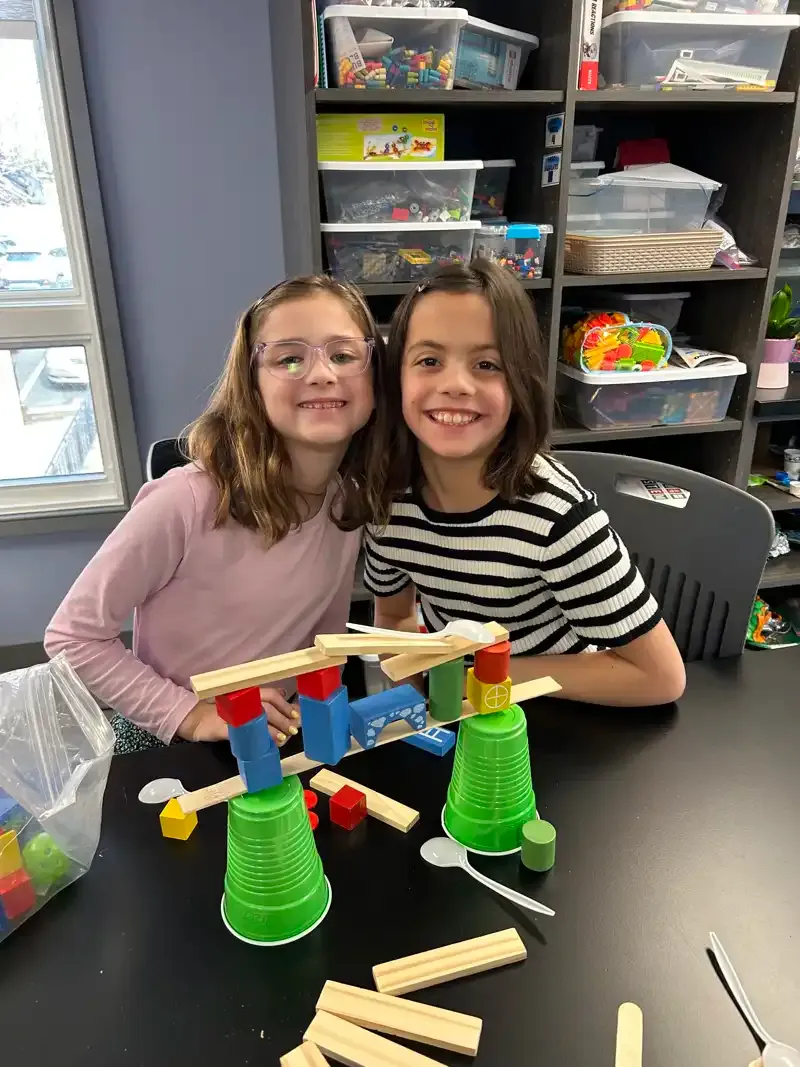
Students explore simple machines and the STEM design process through hands-on building challenges, including a culminating pinball machine project.
Grades 7–8 STEM
Students add a research and presentation component to the STEM process. Students:
- Research a topic
- Practice note-taking
- Create a presentation
- Use their research to inform their design
- Build and test
- Revise their work
Skills Developed
Past Topics Have Included
Bridges, structures, electricity and circuits, and STEM in fashion.